In-House Design · Artwork Support

In-house design and artwork support for print, signage and branding

DSP's in-house design team helps turn business requirements, ideas and existing artwork into practical files prepared around the final physical outcome. From signage and vehicle branding to labels, business print and large-format graphics, the design process stays connected to how the finished work will actually be produced.

  • Artwork preparation
  • Layout & adaptation
  • Production-aware design
  • Print & signage support
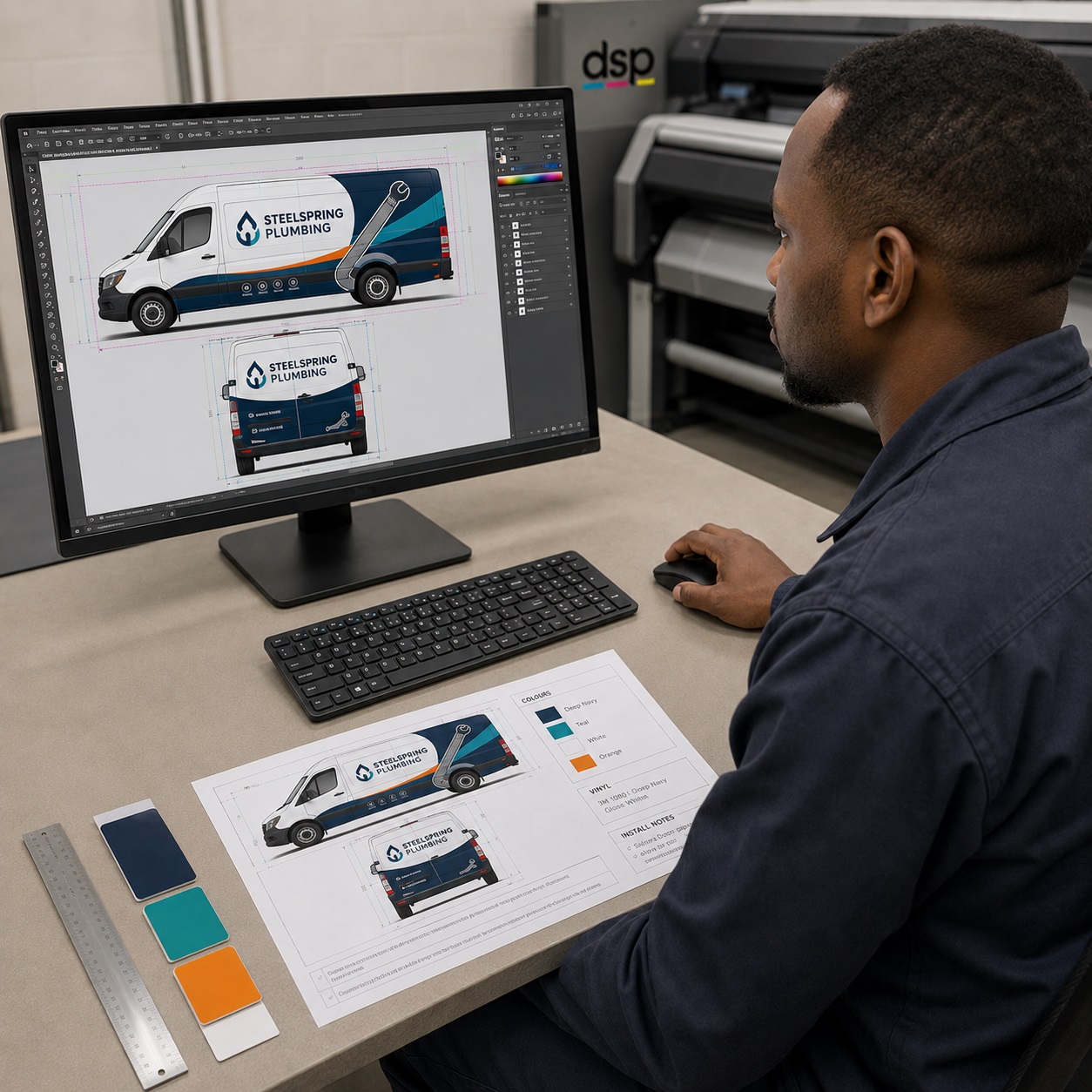
DSP in-house designer preparing vehicle branding artwork for production in Springs, Gauteng
Design connected to production Artwork developed around the finished size, application and physical production requirement.
Practical artwork support

Design support where the finished physical outcome matters

Good production artwork needs to do more than look right on screen. DSP's design team works with the final size, application and production method in mind, helping turn supplied content and brand material into artwork that can move into physical production.

01

Creating new artwork

Where the business has the content, logo or idea but no finished layout, DSP can help develop the artwork around the intended print, signage or branding application.

Useful for: new signs, printed material, labels and branded graphics
02

Adapting existing artwork

Existing artwork can be adjusted where the original layout does not match the size, proportion or practical requirements of the new physical format.

Useful for: repurposing existing brand and campaign material
03

Resizing for different formats

A design that works on a flyer may need a different layout when used on signage, a vehicle, a billboard or another larger physical format. DSP can adapt the artwork around the new dimensions.

Useful for: campaigns used across several print and signage formats
04

Preparing production artwork

Supplied files can be checked and prepared around the confirmed finished requirement so the artwork is aligned with the production job before it moves forward.

Useful for: print-ready and production-ready artwork preparation
05

Keeping campaign material consistent

Where one campaign needs to appear across several physical outputs, artwork can be adapted while keeping the core visual identity and messaging consistent from one format to the next.

Useful for: signage, vehicles, print, labels and large-format campaign material
06

Practical design guidance

Where the client is unsure how much information to include, how the artwork should be arranged or how the design needs to change for the finished format, DSP can provide practical guidance around the production requirement.

Useful for: turning an idea or incomplete brief into a workable production job
Starting your artwork brief

Send what you have and explain what needs to be produced

A useful design brief does not need to be complicated. DSP can start with your available brand material, content and production requirement, then help identify what needs to be prepared before the job moves forward.

01

Logo & brand assets

Send the best available version of your logo together with any brand colours, fonts or existing brand guidelines that should be followed in the artwork.

02

Existing artwork

If previous artwork, layouts or campaign material already exists, send it through. It may provide a useful starting point even if the file needs to be adapted for the new application.

03

Copy & key information

Provide the wording, contact details, product information, offer or other content that needs to appear on the finished item. Indicate which information is most important where possible.

04

Images or visual material

Send any photographs, product images, illustrations or other visual material that should form part of the design, using the best quality files available.

05

The finished application

Explain what is actually being produced — for example signage, vehicle graphics, labels, a brochure, billboard or another physical item — together with the approximate dimensions if known.

06

Required timing

Let DSP know when the finished item is needed, particularly where the artwork and production form part of a launch, campaign, event, installation or other business deadline.

Only have a logo, some wording and a rough idea? That can still be enough to start. Explain what the finished physical item needs to achieve and DSP can help work through the artwork requirements from there.

Discuss Your Design Brief
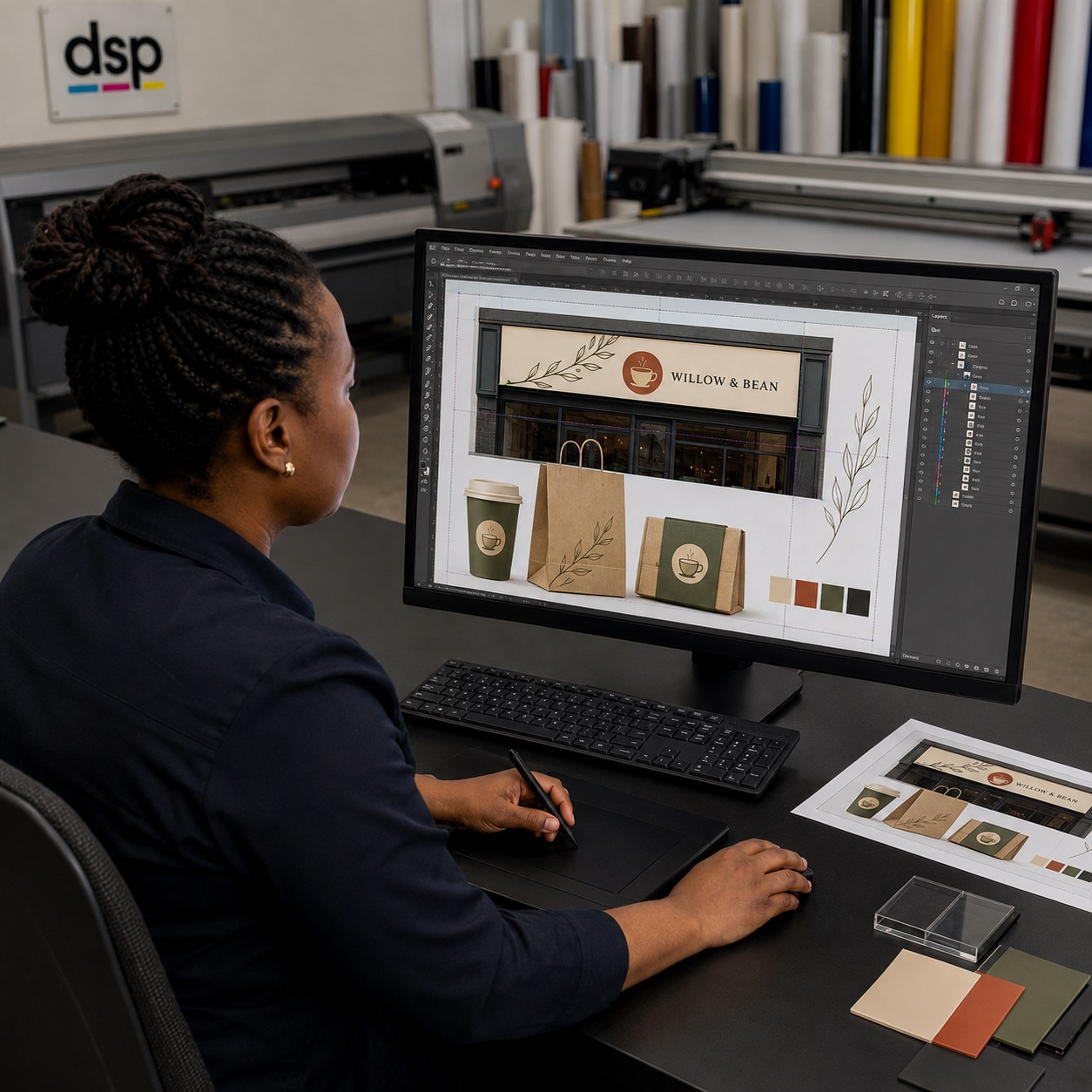
DSP designer developing café signage and packaging artwork at an in-house design workstation in Springs, Gauteng
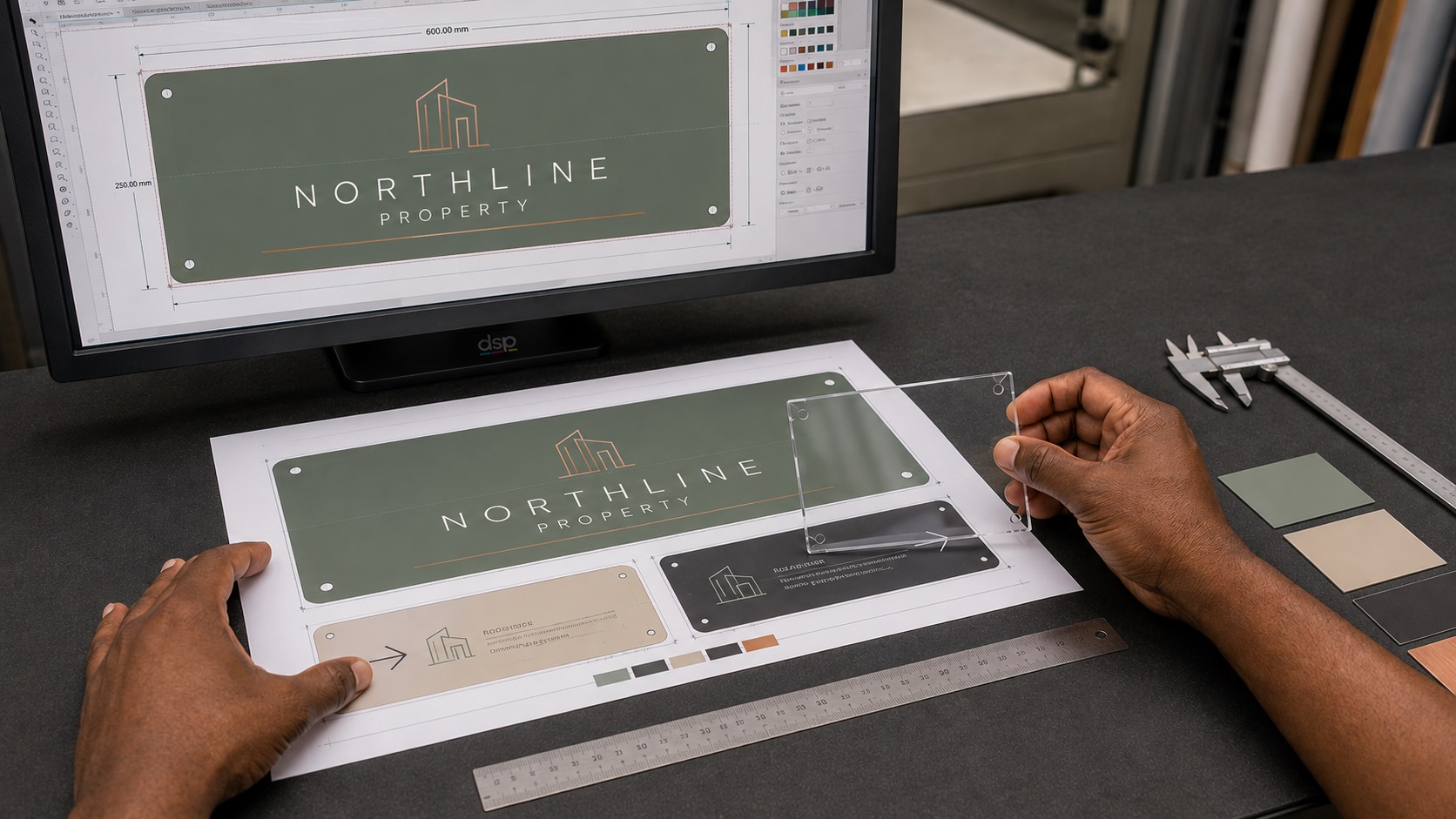
Technician checking acrylic sign dimensions, mounting holes and print-ready artwork against a production proof
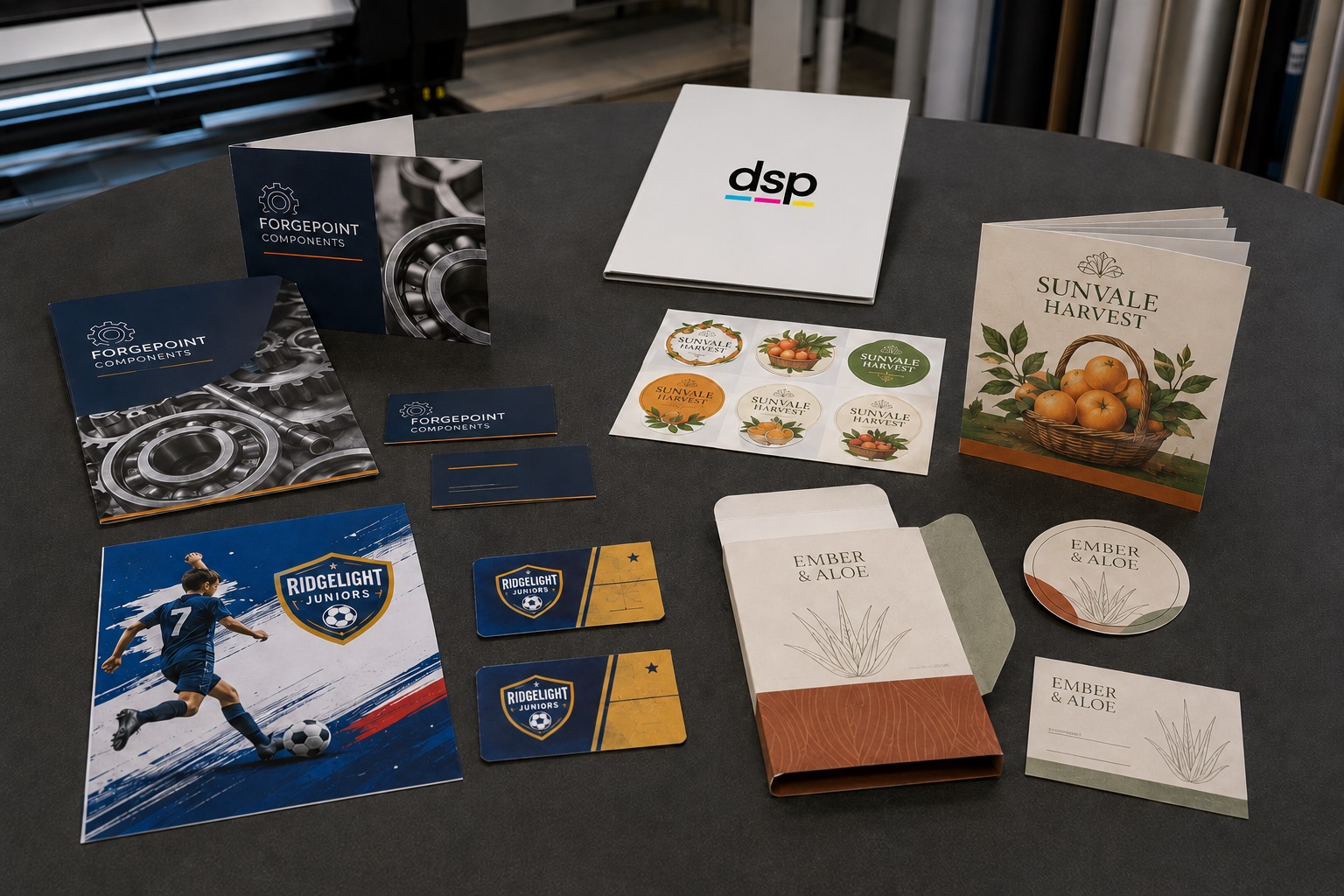
Collection of branding, packaging, signage and promotional design projects created for South African businesses
Design connected to production Artwork is developed around what needs to be printed, cut, branded or produced in the real world.
Design-to-production workflow

From an initial brief to artwork ready for the production floor

DSP's designers work with the finished physical requirement in mind. The artwork is developed or adapted around the actual size, format and production job so design and production remain connected throughout the process.

  1. 01

    Understand the finished requirement

    The process starts with what needs to be produced, how it will be used and the approximate size or format of the finished item.

  2. 02

    Review the supplied material

    Logos, copy, photographs, existing artwork and other brand material are reviewed to establish what can be used and what additional artwork preparation is required.

  3. 03

    Develop or adapt the artwork

    The layout is created or adjusted around the intended physical application, with attention to scale, proportions, hierarchy and the information that needs to remain clear in the finished format.

  4. 04

    Review and approve the layout

    The proposed artwork can be reviewed against the confirmed job requirement so any necessary changes are resolved before the file moves into production preparation.

  5. 05

    Prepare the artwork for production

    Once approved, the artwork is prepared around the specific DSP production requirement so the job can move from the design stage into physical print, signage, branding or specialist production.

In-House Design FAQs

Questions businesses often ask before sending artwork to DSP

You do not need a finished design before getting in touch. The most useful starting point is the material you already have together with a clear explanation of what needs to be produced.

Do I need finished artwork before contacting DSP?

No. You can start with your logo, wording, photographs, existing brand material or even a basic description of what needs to be produced. DSP's design team can help determine what artwork work is required before the job moves into production.

Can DSP adapt artwork I already have?

Yes. Existing artwork can be reviewed and adapted where the size, proportions, layout or intended application has changed. This is particularly useful when the same brand material needs to work in a different physical format.

Can the same artwork be used across print, signage and vehicle branding?

The same core brand material can often be carried across several applications, but the layout usually needs to be adapted for each format. A brochure, vehicle graphic and business sign have different proportions, viewing conditions and production requirements, so DSP can prepare each version around its intended use.

Does DSP provide design support for different types of production work?

DSP's in-house design capability supports a wide range of its print, signage, branding and specialist production requirements. If you have a design-only requirement or are unsure whether the intended job falls within the available service scope, contact the team with the brief so the requirement can be assessed.

Start with what you have

Need artwork prepared for something that has to be printed, branded or produced?

Send DSP your logo, existing artwork, copy, images or a basic description of what needs to be produced. The in-house design team can help develop or adapt the artwork around the finished size, application and production requirements before the job moves forward.